
Negligence Law and Lawyers
from Specialist Lawyers
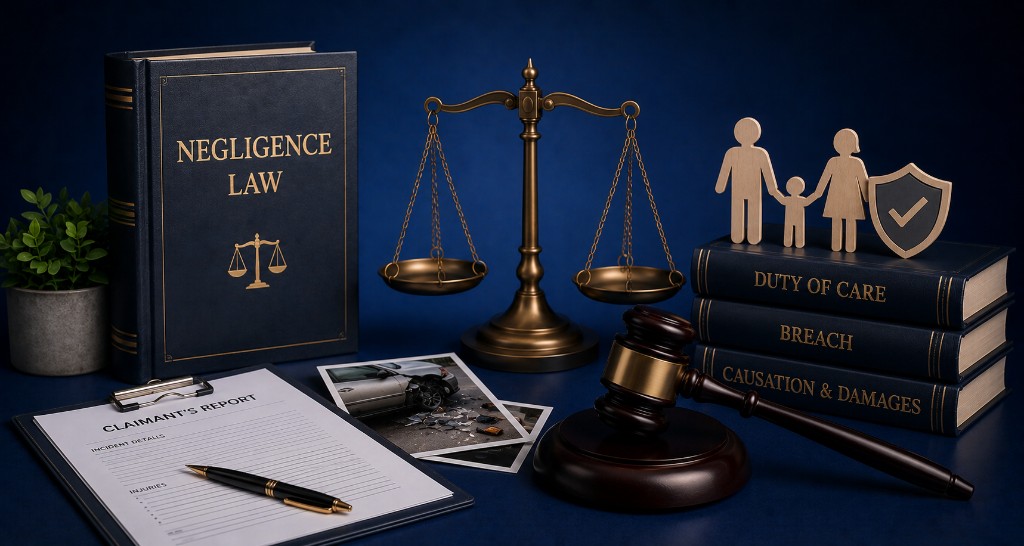
Negligence claims for injury and loss caused by another's failure to take care.
Negligence Claims
The law of negligence applies to many areas of the law. People can suffer from someone elses negligence at work, on the road, or in public. If you have been injured at work on the road or in public, please see our other legal areas, in particular, Workers Compensation, Motor Accident Compensation and Public Liability Compensation.
If you, or someone you know, has suffered due to negligence then please complete our free online legal enquiry form on the right, or click here.
Broadly speaking negligence claims can be broken up into the following two main areas:
- Medical Negligence;
- Professional Negligence; and
- Other Negligence Matters.
Medical Negligence
Medical negligence claims involve claims against doctors, dentists, hospitals, nurses and other healthcare and medical providers. For more information please see our medical malpractice page. Medical malpractice or medical negligence claims can involve the following claims:
- birth injury claims
- pregnancy and maternal injury claims
- spinal injury
- adult brain injury
- surgery claims
- cancer claims
- claims for misdiagnosis
- cosmetic surgery claims
- sports injury claims
- eye treatment claims
- claims against GPs
- accident and emergency claims
- inquests and claims following death
- hospital negligence claims
- dental/dentist negligence claims
- negligent nursing claims
- negligent medical advice claims
Professional Negligence
Professional negligence claims generally involve claims against professional workers and can involve claims for negligence against bankers, architects, surveyors, estate agents, solicitors, accountants, brokers, patent agents, trade mark agents, financial advisers, doctors, other healthcare professionals, auditors, auctioneers, computer consultants and any other advisor whose advice complained of was given in a professional capacity.
Generally speaking, the requirements for making a successful claim in negligence are:
- the existence in law of a duty of care situation (i.e one in which the law attaches liability to carelessness);
- there has to be recognition by law that the careless infliction of the kind of damage complained of on the class of person to which the claimant belongs by the class of person to which the defendant belongs is actionable;
- breach of the duty of care by the defendant (ie. that the conduct complained of fails to measure up to the standard set by law);
- a causal connection between the defendant's careless conduct and the damage;
- that the particular kind of damage to the particular claimant is not so unforeseeable as to be too remote.
When these 4 requirements are satisfied, the defendant is liable in negligence. Only then is it relevant to consider the assessment of damages, that is, the compensation for the damage for which the defendant is responsible.
If you, or someone you know, has suffered due to negligence then please complete our free online legal enquiry form on the right, or click here.
Negligence Law and Examples of Negligence
Negligence is the failure to use reasonable care. That is, negligence is measured against what a reasonable person would have done under the same or similar circumstances. This can include a wrongful act as well as not doing something. Negligence claims can range from someone not mopping up a spill on the floor to a professional not providing proper professional advice (also known as professional negligence).
If you are injured or have suffered damages because someone else acted in a negligent manner, you may have a cause of action, or a lawsuit, against the person who acted unreasonably.
Strict time limits apply for matters involving negligence. You should seek legal advice as soon as possible. So don't delay - complete our fast, free Legal Enquiry Form NOW!
Elements of Negligence
Apart from that already mentioned above, generally speaking, for negligence to be established, the plaintiff must be able to prove that:
- there was a duty of care,
- that this duty was breached, and
- that this breach caused the injury.
Forms of Negligence
There are many forms of negligence. Some examples of negligence can include, but are not limited to:
- a manufacturer breaching their duty of care by providing a defective and unsafe product. For example, a person buying a cereal box and finding glass in the box.
- a driver breaching their duty of care to drive safely on the road. For example, a driver running a red light.
- an employer breaching their duty of care to provide a safe workplace and ensuring the right safety measures are in place. For example, an employee injuring their back trying to lift a heavy box.
- the owner of a shopping centre breaching their duty of care to provide a safe place for you to shop. For example, a customer tripping over a broken tile.
- a doctor breaching their duty of care in providing the wrong medical advice and treatment. For example, a doctor prescribing the wrong medicine.
If you have been injured or suffered property damage due to someone else's negligence, then you are entitled to make a claim for compensation.
The purpose of compensation is to compensate you for the following possibilities:
- Loss of earning capacity
- Physical disabilities and medical problems both now and later on in life, when you get older
- Medical and hospital costs
- Attendant care and rehabilitation costs
- Damaged or destroyed personal property
- House and motor modifications to accommodate your injuries
- Dependant spouse and / or dependant children
- Other compensation entitlements, damages and loses
If you, or someone you know, has suffered due to negligence then please complete our free online legal enquiry form on the right, or click here.
Further Resources - Negligence Law and Lawyer
Additional Information 1 - Negligence Law and Lawyers
Additional Information 2 - Negligence Law and Lawyers
Additional Information 3 - Negligence Law and Lawyers
{cms_module module='Forum' forum="Negligence Law Discussion Forum"}
Get Free Legal Advice
There are strict time limits which may apply to your case — so don't delay, act today. Complete your free legal enquiry form to request immediate legal assistance.
Free Legal EnquiryFree Legal Enquiry
Tell us about your legal matter and we'll connect you with a specialist lawyer in your area.